Reverse Engineering — From Physical Part to Editable CAD
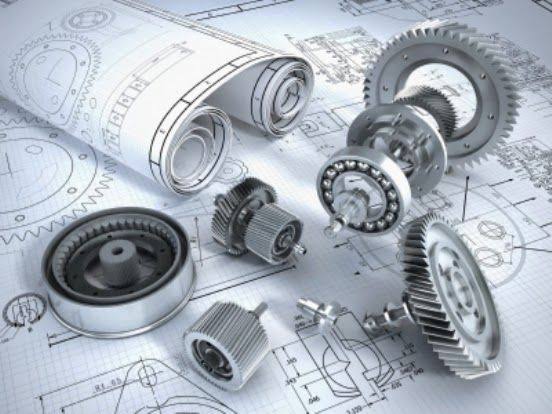
Reverse engineering is the process of taking a real, physical object and rebuilding it as a clean digital 3D file — one you can measure, modify, 3D print, or send to a machine shop. Customers come to us with all kinds of situations: a broken part on a discontinued machine, an antique automotive component with no drawings, a competitor's product that needs benchmarking, or an heirloom that has to be reproduced.
Whatever the starting point, the goal is the same: a CAD file that behaves like it was designed from scratch. Not a raw mesh, not a scanned point cloud, but a parametric solid model with features you can edit, dimensions you can drive, and drawings you can inspect against.
The two halves of reverse engineering
Capture. First we have to get the shape of the object into the computer. For most jobs we use blue-laser 3D scanning, which measures the surface to about ±0.03 mm. Larger or more organic objects get infrared or photogrammetric capture; big assemblies and vehicles get LiDAR. Where scanning is not the right tool — very simple parts, transparent glass, tiny high-precision threads — we measure the part with calipers, micrometers, and thread gauges.
Rebuild. The scan itself is a mesh: millions of tiny triangles that describe the surface. Useful, but not editable. Our engineers take that mesh and rebuild it feature by feature inside SolidWorks or Fusion 360 — extrusions, revolves, patterns, fillets, holes, threads. The finished file is watertight, dimensioned, and change-friendly, so if you want the wall a millimeter thicker or the mounting hole moved 5 mm, it takes minutes.
Common reverse-engineering projects
Legacy part reproduction. Older cars, tractors, industrial equipment, appliances, and consumer products often have parts that are no longer manufactured. Send us the broken original — or, if you only have one working example, ship it carefully — and we will scan, rebuild, and if you want, print or machine the replacement.
Aftermarket and custom accessories. If you build products that fit somebody else's product — phone cases, custom bumpers, engine bay accessories, camera cages — reverse engineering the base part first is how you guarantee your accessory actually fits. We deliver an accurate model of the reference part so your team can design against it.
Design improvements. Many customers come with a part that works but has weak spots. We reverse-engineer the original, then redesign the failing area — thicker walls, added ribs, a better material — and produce a stronger version that still bolts into the existing assembly.
Inspection and QA. If you need to check whether a manufactured part matches its original CAD, we scan the physical part and produce a color-map deviation report showing exactly where the two disagree and by how much.
What we need from you and what you get back
The best thing you can send us is the physical part itself. Second best is a highly detailed set of photos with a ruler in every frame, plus every measurement you can take with calipers. If the part has internal features (bearing bores, threaded holes, o-ring grooves), tell us about them — those are often invisible from outside.
Standard deliverables are a native CAD file (SolidWorks or Fusion 360), a STEP file that works everywhere, a print-ready STL, and 2D drawings if the part will be inspected. Turnaround is usually 3–7 business days for a single mechanical part; complex assemblies scale from there. If you also want us to make the replacement — whether via FDM, resin, or a CNC shop — we can handle that in the same project.
Materials
- • Metal parts (any alloy)
- • Plastic housings & consumer goods
- • Rubber & elastomer components
- • Composite & carbon-fiber parts
- • Wood, foam, clay masters
- • Assemblies with hardware
- • Antique & fragile heirlooms
Capabilities
- • Scan-to-CAD parametric rebuild
- • Feature-based, fully editable
- • ±0.03 mm capture accuracy
- • Watertight STEP output
- • Inspection color-map reports
- • Design improvement pass optional
- • Production of the replacement part
Industries served
- • Classic & muscle car restoration
- • Aerospace & defense sustainment
- • Legacy industrial equipment
- • Medical device redesign
- • Consumer electronics accessories
- • Museum & artifact preservation
- • Prosthetics & orthotics
Frequently asked questions
How is reverse engineering different from just scanning?+
A 3D scan gives you a mesh — millions of tiny triangles describing the surface. Reverse engineering takes that mesh and rebuilds the part as a proper CAD model with editable features, dimensions, and history.
How accurate is the finished CAD file?+
Typically within ±0.05 mm of the physical part on standard mechanical work. Higher-tolerance projects (bearing fits, sealing surfaces) get extra attention and validation.
Can you reproduce a part I don't have any drawings for?+
Yes — that is exactly the service. Send the part, we handle the rest.
Do you keep customer parts confidential?+
Yes. We sign NDAs on request and never reuse customer geometry for other work.
Can you improve the part while you rebuild it?+
Absolutely. Many customers ask us to strengthen weak areas, adapt the part to a modern material, or update the mounting interface. Because the CAD is parametric, changes are quick.
What if my part has internal features I can't see?+
We handle it three ways depending on the part: careful disassembly, CT scanning through a partner lab, or measurement of the mating parts. Tell us what you know and we will pick the right approach.
Explore our other services
Ready to start your reverse engineering project?
Send us your files, sketches, or a photo — we'll review and reply with a quote.
Request a Quote →